

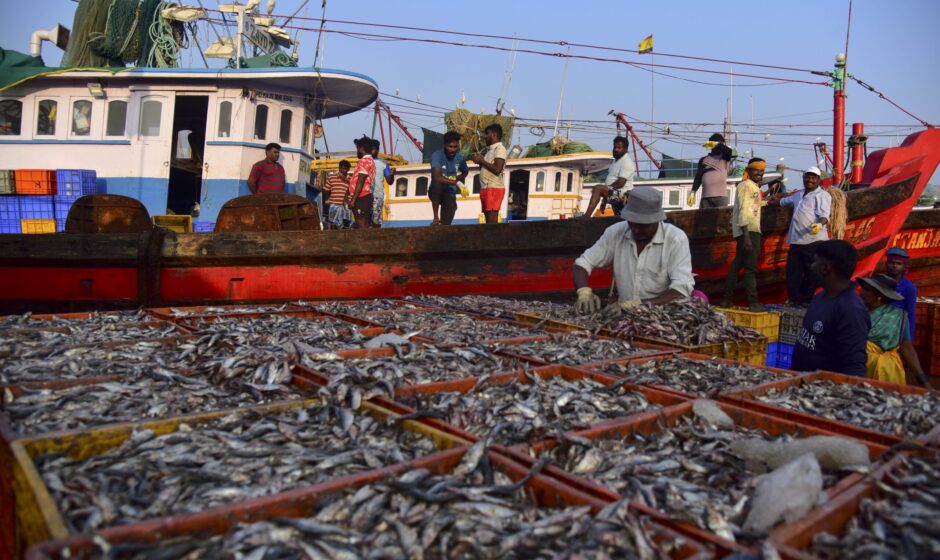

India’s seafood sector is currently riding a massive wave of economic success. In the fiscal year 2025-26, India’s marine exports surged to a historic, all-time high of $8.28 billion (₹72,325.82 crore), moving an impressive 19.32 lakh metric tonnes of seafood across the globe. Driven heavily by the robust performance of frozen shrimp, the industry has showcased incredible resilience, successfully diversifying into high-growth markets like the European Union and China amidst shifting global trade dynamics.
However, behind these soaring macroeconomic triumphs lies a complex and rapidly shifting landscape of global trade policy. At the very center of this transformation is the World Trade Organization’s Agreement on Fisheries Subsidies (WTO-FSA). For corporate leaders, seafood exporters, and the millions of people powering India’s coastal economy, understanding the nuances of this pact is no longer optional—it is a strategic necessity.
Here is a deep dive into the WTO-FSA, India’s strategic stance, and what it ultimately means for the future of the Indian marine industry.
Understanding the WTO Fisheries Subsidies Agreement (WTO-FSA)
To put it simply, the WTO-FSA is a landmark international treaty aimed at protecting our oceans. Adopted during the 12th Ministerial Conference in June 2022, it holds the unique distinction of being the first multilateral WTO agreement with environmental sustainability as its primary objective.
The agreement is being negotiated in two phases. The first phase, colloquially known as “Fish One,” officially entered into force on September 15, 2025, after securing ratifications from over two-thirds of the WTO membership. This initial phase focuses on prohibiting subsidies that directly fund Illegal, Unreported, and Unregulated (IUU) fishing, as well as subsidies that support fishing on already overfished stocks.
While the goals of “Fish One” are universally applauded by environmentalists, the ongoing “Fish Two” negotiations are proving to be a geopolitical battleground. These Phase 2 talks aim to introduce comprehensive disciplines on subsidies that contribute to general overcapacity and overfishing—a category that accounts for more than $22 billion in harmful global subsidies annually.
India’s Stance: Protecting the People Behind the Catch
While 119 member nations have ratified Phase 1 as of mid-2026, key fishing powerhouses, including India, have strategically chosen to withhold their ratification. This is not a rejection of ocean sustainability; rather, it is a calculated diplomatic stance designed to protect the human element of the marine industry.
The reality of India’s fisheries sector is vastly different from that of developed nations. India is not a heavily industrialized fishing nation; it does not operate massive, heavily mechanized distant-water fleets that sweep international waters. Instead, the sector is the socio-economic backbone for over 9 million fisher families, the vast majority of whom are small, traditional, and artisanal operators practicing low-impact methods.
India’s core argument on the global stage is one of fundamental equity: equal rules for unequal actors are unjust. The numbers speak volumes. India provides a modest, welfare-oriented subsidy of barely $15 to $35 per fisher family annually. In stark contrast, some advanced economies inject up to $79,000 per fisher annually to sustain corporate industrial fleets.
Consequently, at recent summits like the 14th Ministerial Conference (MC14) in Cameroon, India strongly advocated for Special and Differential Treatment (S&DT). Specifically, India is demanding a 25-year transition period for developing countries to adjust their policy frameworks, stronger disciplines strictly targeting distant-water industrial fleets, and a permanent carve-out exemption to protect small-scale and artisanal fishers.
Implications for the Indian Marine Industry
For seafood exporters, processors, and corporate stakeholders in India, the ongoing WTO-FSA negotiations carry profound implications for the future of international trade.
1. The Premium on Verifiable Sustainability As global markets become increasingly eco-conscious, regulatory compliance is the new currency of trust. While India negotiates for fairness in Geneva, Indian exporters must continue to prove their commitment to sustainability to international buyers. Markets like the European Union, which saw a 37.9% surge in Indian seafood imports in FY 2025-26, maintain some of the strictest environmental and traceability standards in the world. Importers in these regions are watching the WTO developments closely, making it vital for Indian corporations to highlight their domestic sustainability metrics.
2. Proactive Compliance: The SHAPHARI Advantage Fortunately, India is not waiting for international mandates to elevate its domestic standards. The Marine Products Export Development Authority (MPEDA) has proactively launched the “SHAPHARI” aquaculture certification program. Translating to “superior quality fish” in Sanskrit, SHAPHARI ensures that Indian shrimp hatcheries and farms produce antibiotic-free products while strictly adhering to Good Aquaculture Practices (GAP). By integrating rigorous Pre-Harvest Tests (PHT) and National Residue Control Plans (NRCP), India is building a robust, verifiable supply chain that aligns perfectly with the spirit of the WTO’s environmental goals.
3. The Ticking Clock: The Article 12 “Sunset Clause” The industry must also prepare for upcoming multilateral deadlines. The WTO-FSA contains a built-in “sunset clause” under Article 12. This clause stipulates that if comprehensive rules regarding overcapacity and overfishing (Fish Two) are not successfully adopted within four years of Fish One entering into force—meaning by September 2029—the entire agreement will lapse and be scrapped. India is utilizing this “time bomb” clause as leverage to keep the pressure on developed nations, ensuring they deliver a balanced and equitable final outcome.
Conclusion: Fair Seas and Fair Trade
The intersection of the Indian marine industry and the WTO Fisheries Subsidies Agreement is a testament to the complexities of modern global commerce. On one hand, India is demonstrating unmatched industrial scale, pushing past $8 billion in exports and continuously upgrading its processing and cold-chain infrastructure. On the other hand, the nation is holding a firm diplomatic line to ensure that global environmental policies do not inadvertently penalize the vulnerable communities that have stewarded these waters for generations.
For businesses operating within this ecosystem, the path forward requires a dual approach. At the macro level, supporting India’s demand for “Fair Seas and Fair Trade” ensures the long-term survival of the coastal workforce. At the micro level, aggressively adopting domestic quality certifications like SHAPHARI, investing in supply chain traceability, and championing ethical sourcing will be the key differentiators that secure India’s dominance in the global seafood market for decades to come.