

Seafood Of India

Blog Post

India Digitizes the Deep: Landmark National Census to Revolutionize Fisheries Management

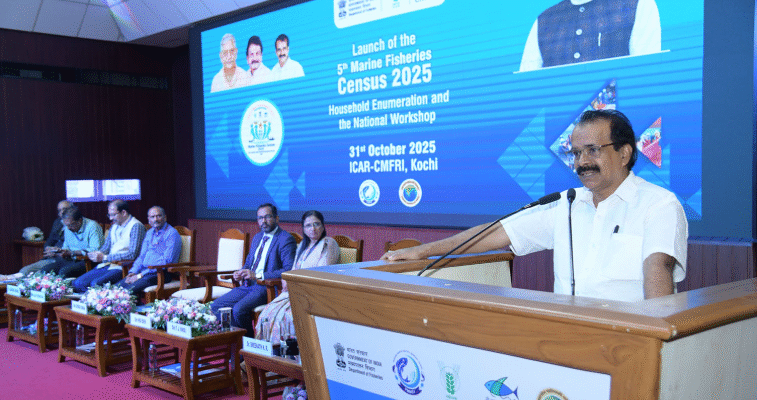
In a foundational shift for one of its most vital traditional sectors, India has launched its first-ever fully-digitized National Marine Fisheries Census (MFC), a move set to create the most comprehensive and granular database of the nation’s coastal communities in history. The initiative, driven by the Ministry of Fisheries, Animal Husbandry, and Dairying, replaces decades of paper-based data collection with a modern, app-based approach, heralding a new era of evidence-based policymaking and targeted support for millions of fishers. This monumental undertaking, which kicked off on November 3rd and will run for 45 days, aims to survey an estimated 1.2 million fisher households across 4,000 coastal villages. The data, collected by the Central Marine Fisheries Research Institute (CMFRI), will capture a wealth of information, from the socio-economic status of families to detailed inventories of fishing vessels, gear types, and the infrastructure at harbors and processing facilities. Launching the census on October 31st, Union Minister of State for Fisheries, Shri George Kurian, hailed the project as a “paradigm shift.” He emphasized, “This edition marks a major technological shift as the first fully digitised data collection in the history of Indian fisheries.” A crucial component of this digital transformation is its direct link to government welfare programs. Minister Kurian announced that registration on the new National Fisheries Digital Platform, a key part of the census process, will be a mandatory requirement for fishers and fish farmers to access financial benefits under the Pradhan Mantri Matsya Kisan Samridhi Sah-Yojana (PM-MKSSY). “Only fishermen and fish farmers who are registered on the portal will be eligible to receive financial assistance from the Central government,” he stated, making the census not just a headcount, but a critical gateway to economic support. The new geo-referenced database is expected to provide an unprecedented level of detail, allowing for more precise and impactful government interventions. According to the ministry, this robust foundation of data will inform everything from infrastructure development to the targeted distribution of essential equipment. As part of this data-driven approach, the government plans to actively install vital scientific equipment, such as transponders for safety and two-way communication at sea, and Turtle Excluder Devices (TEDs) to promote sustainable fishing practices, all free of charge to fishermen. J. Jayasankar, a principal scientist at CMFRI, noted that while a digital process is inherently faster, the census period has been extended from the traditional 30 days to 45 days, concluding on December 18th. This extension, he explained to The New Indian Express, is a direct result of the vastly expanded scope of the survey, which now delves deeper into the socio-economic fabric of coastal populations to ensure future policies are accurately tailored to their needs. After extensive preparations, including pre-census workshops and coordination meetings with enumerators and state officials, this fifth edition of the Marine Fisheries Census is set to be the most ambitious yet. By leveraging technology to map its marine resources and the communities that depend on them, India is charting a course toward a more sustainable, prosperous, and secure future for its entire fisheries sector.
Read More

Seafood Surge: India Poised for a Golden Year as European Appetites and Global Trade Winds Turn Favourable

As the Hindu lunar year Samvat 2082 dawns, one of India’s leading integrated aquaculture and seafood enterprises, Kings Infra Ventures Limited, is painting a vibrant and optimistic picture for the nation’s seafood industry. A confluence of burgeoning European demand, promising resolutions to international trade disputes, and strong domestic expansion signals a period of significant growth and global recognition for Indian seafood. The European Wave: A Vote of Confidence The most significant tailwind propelling this optimism is a remarkable surge in demand from the European continent. Kings Infra reports a substantial and growing order book from a host of European nations, including Spain, Italy, Portugal, France, Greece, the Netherlands, and Belgium. This isn’t merely a transactional increase; it represents a profound acceptance of Indian seafood on the world stage, validating its quality, consistency, and adherence to rigorous international sustainability standards. Shaji Baby John, the Chairman and Managing Director of Kings Infra Ventures Ltd., articulated this sentiment perfectly, stating, “The wider acceptance of Indian seafood across Europe is a strong vote of confidence in the quality and consistency of our products.” This growing appetite is cementing India’s reputation not just as a supplier of raw materials, but as a producer of high-caliber, value-added seafood products that can compete in the world’s most discerning markets. Navigating Global Tides: From Washington to London The positive outlook extends to the complex world of international trade. There is mounting optimism regarding a potential resolution to the persistent tariff issues with the United States. A landmark development fuelling this hope is the approval of India’s proprietary Turtle Excluder Device (TED) design by the US Food and Drug Administration (USFDA). This technical approval is a crucial step towards addressing the core environmental concerns that have previously led to trade barriers, paving the way for smoother access to the lucrative American market. Simultaneously, new trade avenues are opening up. Impending trade agreements with the United Kingdom are expected to create preferential terms for Indian exporters, while demand from the Middle East continues its upward trajectory. Furthermore, improving trade relations with China are adding another layer of opportunity, creating a diversified and more resilient export market for Indian companies. Strengthening the Homefront: Domestic Expansion and Innovation While its global ambitions are soaring, Kings Infra is reinforcing its foundations at home. The company is executing a multi-pronged strategy to enhance its domestic capabilities. A key element is the expansion of its farming capacity, which has already grown by over 50% through an innovative farm leasing program. To support this increased production, Kings Infra is aggressively building out its infrastructure. Through its subsidiary, Kings Frigo, the company is developing a state-of-the-art cold chain and retail distribution network to deliver premium seafood across the country. Meanwhile, another venture, Bento, is catering to the modern urban consumer by introducing a range of convenient, value-added seafood meals. Looking ahead, the company is set to deepen its presence in the heart of India’s aquaculture region with a planned acquisition of a processing facility in Visakhapatnam, Andhra Pradesh. This strategic move will enhance its sourcing and processing capabilities, positioning it for even greater growth. The Government’s Anchor Support This private sector dynamism is being powerfully supported by a slew of proactive government initiatives. Kings Infra acknowledges the transformative impact of programs like the Pradhan Mantri Matsya Sampada Yojana (PMMSY) and the Fishery and Aquaculture Infrastructure Development Fund (FIDF). These schemes, along with subsidies from the Marine Products Export Development Authority (MPEDA), grants from the Ministry of Food Processing Industries, and assistance under various MSME schemes, are creating a fertile ecosystem for growth. They are promoting modern aquaculture practices, funding critical infrastructure development, and empowering producers to meet and exceed global quality standards. As Samvat 2082 unfolds, Kings Infra Ventures Ltd. stands at the forefront of an industry on the cusp of a major leap. Fuelled by innovation, international recognition, and robust domestic strategy, the company is ready to steer India’s seafood sector toward a sustainable, prosperous, and globally celebrated future.

Read More