

 editor
10 Million Women Anchor India’s Inland Fisheries, but Climate Strains and Data Gaps Threaten Livelihoods
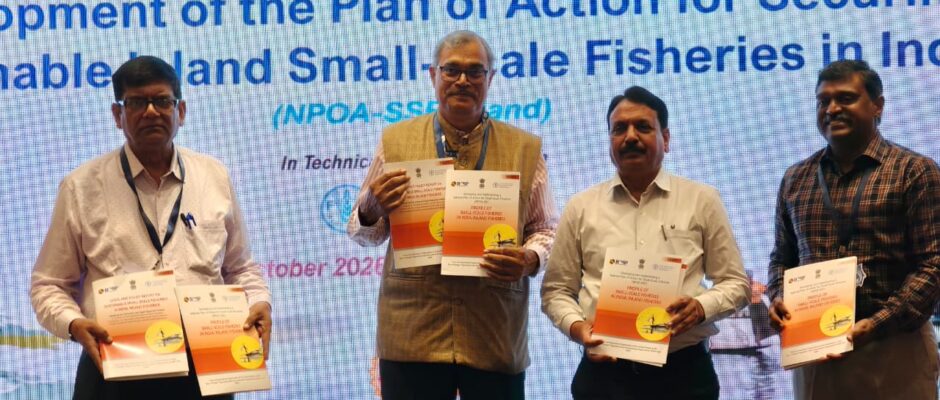
A landmark FAO-BOBP study reveals women make up 44% of India’s 23 million inland fishers, while urging urgent reforms to counter habitat degradation, tenure insecurity, and data blindness. Women represent nearly 44% of India’s 23.12 million inland fishers, yet their contributions remain largely hidden in official records while ecological and institutional pressures mount on freshwater ecosystems. According to a comprehensive country profile prepared by the Bay of Bengal Programme Inter-Governmental Organisation (BOBP-IGO) and the Food and Agriculture Organisation (FAO) of the United Nations, 10.10 million women actively sustain India’s inland small-scale fisheries. Despite this footprint, deep-seated data blind spots, deteriorating aquatic habitats, and insecure tenure rights continue to jeopardize the sector’s long-term viability. The findings were presented in Bhopal, Madhya Pradesh, at the launch workshop for India’s National Plan of Action (NPOA) on Small-Scale Inland Fisheries. Overlooked Labor: Bridging the Gender Data Gap While millions of women handle critical post-harvest processing, retailing, and family-run aquaculture operations, their work is rarely captured in state-level economic assessments. Subsistence harvesting and informal distribution networks are routinely excluded from conventional fisheries statistics. This statistical omission prevents policy interventions, credit programs, and social safety nets from reaching the women who keep local fish supply chains moving. “Better recognition of women’s roles is essential for understanding the sector’s real workforce,” emphasized Dr. P. Krishnan, Director of BOBP-IGO. “Ensuring that fisheries development initiatives adequately reflect the needs and contributions of women is central to building equitable rural economies.” Ecosystem Degradation and Competing Freshwater Demands India’s inland water systems face compounding environmental and anthropogenic threats that disrupt natural fish breeding cycles: Dr. Krishnan noted that protecting these habitats must become an integral component of broader water-security planning, particularly as climate volatility alters regional hydrology. Jurisdictional Overlaps and Insecure Water Tenure Beyond environmental shocks, inland fishers face significant administrative hurdles. Small-scale operators often contend with insecure fishing leases, brief tenure windows, and opaque auction mechanisms that favor commercial contractors over traditional fishing cooperatives. Governance is further complicated by overlapping jurisdictional mandates. A single water body may fall under the competing regulatory purviews of: This institutional fragmentation leaves fisherfolk with weak bargaining power and limited legal recourse when access rights are curtailed. Laying the Groundwork for the National Plan of Action To resolve these systemic bottlenecks, the Department of Fisheries, Government of India, is formulating an overarching National Plan of Action in collaboration with BOBP-IGO and the Government of Madhya Pradesh. With scientific backing from the Indian Council of Agricultural Research (ICAR) fisheries institutes and technical oversight from the FAO, the NPOA aligns India’s domestic fisheries governance with the FAO’s Voluntary Guidelines for Securing Sustainable Small-Scale Fisheries. Establishing fine-grained data collection across individual water bodies, formally recognizing women’s post-harvest labor, and safeguarding traditional water access rights will serve as the three core pillars in transforming India’s inland small-scale fisheries into a resilient, climate-adaptive sector.